
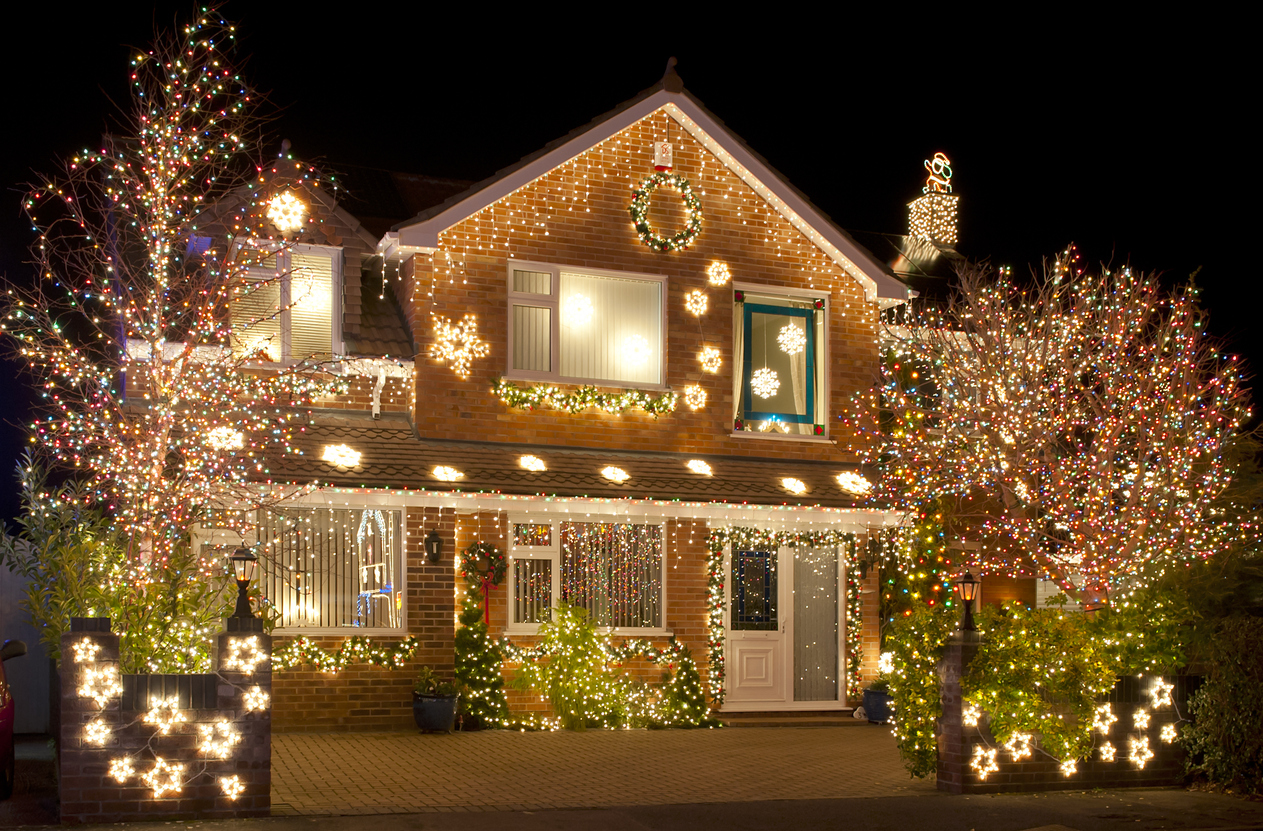
The last jack-o’-lantern hasn’t even made it to the curb and you already know what’s coming. Your wife has that look. The one that says, “Those Christmas bins aren’t going to carry themselves down from the attic.” Never mind that there’s still a bowl of fun-sized candy bars by the front door. In every woman’s book, November 1st is officially Christmas and time for holiday lighting.
And honestly? They’re on to something. Hanging outdoor lights on a crisp November afternoon beats doing it in a mid-December sleet storm. So you haul down the bins and spend the whole Saturday on a ladder. The gutters are lined, the bushes are wrapped, and the inflatable snowman is standing proud. You plug in the last strand, the neighbors start to slow down for a look and then… darkness. Again.
If your Christmas lights tripping the breaker has become an annual tradition, you’re not alone. We hear about it every December from homeowners all over Genesee County. The good news is that it’s almost always fixable. And the reason it happens is usually your electrical system doing exactly what it’s supposed to do: protecting you.
Why Your Christmas Lights Keep Tripping the Breaker
A tripped breaker or a popped GFCI isn’t your house being a Grinch. It’s a safety device catching a problem before it turns into a shock or a fire. Here are the usual suspects.
Water Found Its Way In
Michigan Decembers are wet. Rain, sleet, melting snow and dew all love to settle into plug connections, especially ones lying on the ground. When moisture bridges the gap between the hot and neutral prongs, a little current “leaks” where it shouldn’t. A GFCI outlet notices the leak in a fraction of a second and shuts everything off.
If your lights work fine on dry days and quit after every storm, water is your culprit nine times out of ten.
Too Many Strands on One Circuit
Every circuit in your home has a limit. Pile enough lights, inflatables and animated reindeer onto one circuit and the breaker trips to keep the wires from overheating. What’s likely the cause? Your outdoor outlet probably shares a circuit with something inside, like the garage freezer, the porch light, or a bedroom.
Indoor Cords Doing an Outdoor Job
That brown extension cord from the junk drawer was never meant to live in a snowbank. Indoor cords have thinner insulation that cracks in the cold and soaks up moisture. They’re a common cause of nuisance trips and a real risk of fire and shock.
Worn-Out or Damaged Strands
Lights that spent eleven months tangled in a hot attic don’t always come out healthy. Watch for:
- Cracked or chewed insulation
- Broken or empty sockets
- Bent, loose, or scorched plugs
- Strands that feel warm to the touch
Got An Older Home? Your Lights Might Be Telling You Something
A lot of the homes we work in across Genesee County were built in the 1950s, ‘60s, and ‘70s. They’ve got great bones, big yards and plenty of character. They also have electrical systems designed for a world without inflatable lawn decorations, space heaters, and three TVs.
Old Panels, Modern Demands
Many mid-century homes are still running on their original panel, or even an old fuse box. Some brands from that era, like Federal Pacific and Zinsco, have a reputation for breakers that don’t trip when they should. That’s the opposite problem from nuisance trips, and it’s a lot scarier.
Outlets That Were Never Built For Outside
In many older homes, the “outdoor outlet” is one of these:
- A two-prong, ungrounded receptacle on the porch
- An indoor-style outlet with a flimsy flip cover
- No GFCI protection at all, since it wasn’t widely required until the early 1970s
- No outdoor outlet whatsoever, which leads to cords run through a cracked-open window
Just Bought the House? Welcome to the Surprises
If you’re a new homeowner, holiday decorating is often the first time you really put the home’s wiring to work. That’s when hidden problems show up: a mystery outlet that’s dead, a circuit that runs half the house, or a DIY splice the previous owner left behind. Your first December is a great time for an electrical inspection, so you know what you’re working with.
What a Safe Holiday Lighting Setup Looks Like
Holiday lighting safety isn’t complicated once you know the basics. Think of it as three layers: the right outlet, the right cords, and smart connections.
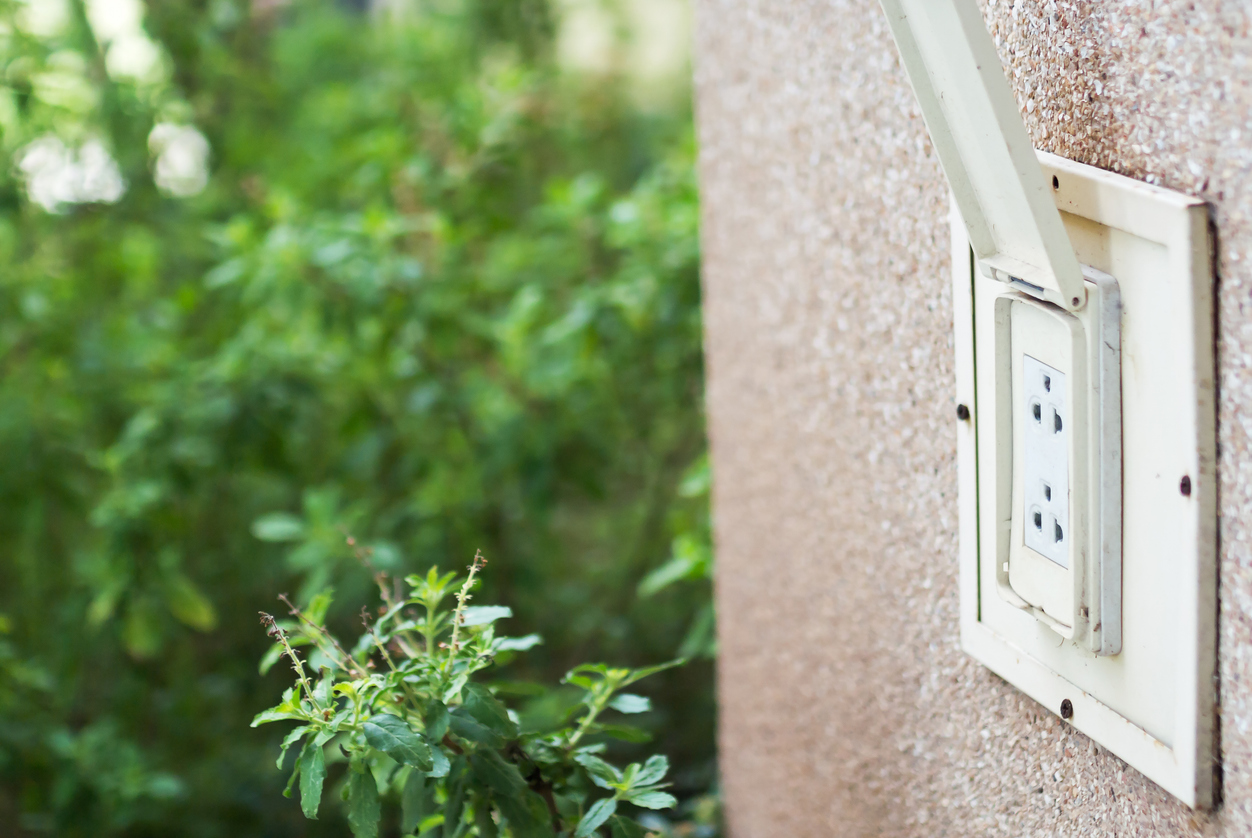
Start With a Covered Outdoor GFCI Outlet
Your outdoor Christmas light outlet should check three boxes:
- GFCI protected. An outdoor GFCI outlet cuts power the instant it senses current leaking through water or a person. It’s the single biggest safety upgrade for any display.
- Weather-resistant. Look for “WR” stamped on the face. These receptacles are built to handle moisture, UV, and freezing temperatures.
- In-use cover. That’s the bubble-style cover that stays closed even with a cord plugged in. A flat flip cover only protects the outlet when nothing’s using it, which is exactly when you don’t need it.
Quick Tip: Press the TEST button on your outdoor GFCI before you hang a single strand of lights. If it doesn’t click off, it isn’t protecting you.
Use Outdoor-Rated Cords and Lights
Check the tag on every cord and strand. You want an outdoor rating from a recognized lab like UL or ETL. A few more rules from the field:
- Match the cord’s gauge to the load. Heavier cords (lower gauge numbers) handle more lights over longer runs.
- Skip the daisy chains. Most light packages list a maximum number of strands you can connect end to end. Respect it.
- Never run cords through doors or windows, where they get pinched and frayed.
Keep Connections Up and Dry
Water pools on the ground, so your plug connections shouldn’t live there. Use stakes or hooks to lift them off the grass, or tuck them into a weatherproof connection box. Plastic clips beat staples and nails every time.
Put All Decorations on a Timer
An outdoor-rated timer saves energy, saves you a nightly trip outside and means your lights aren’t running all night unattended.
How Many Lights Can One Circuit Handle?
Here’s the electrician’s back-of-the-napkin math. Most household outlets sit on a 15-amp or 20-amp circuit at 120 volts.
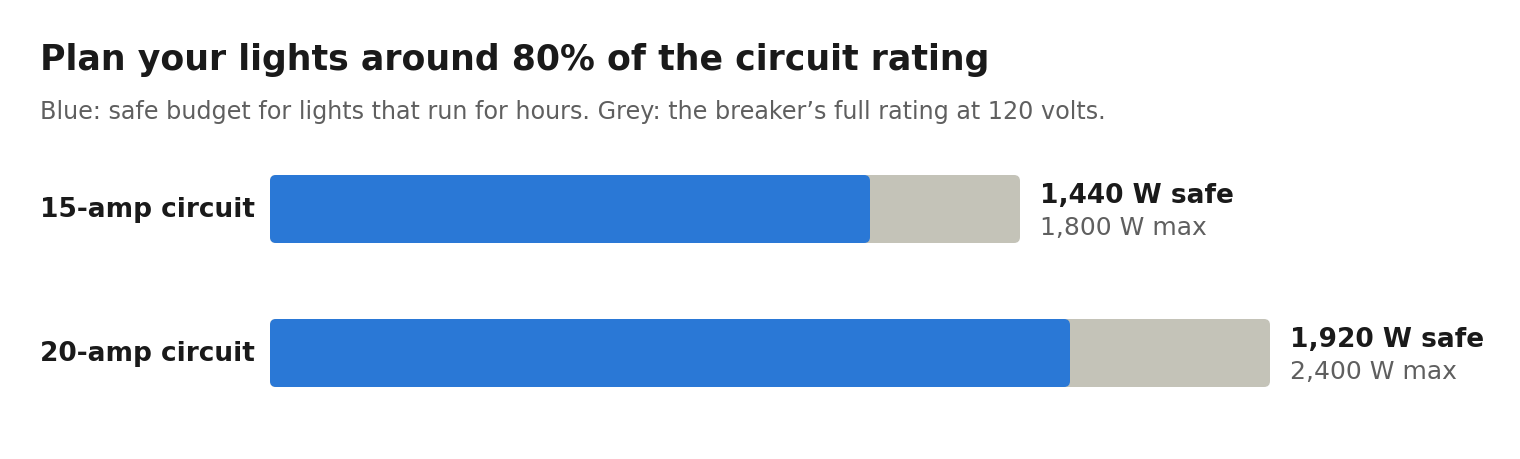
We aim for 80% because holiday lights run for hours at a stretch, and long-running loads are hard on wires and breakers. And remember, that budget is shared with whatever else lives on the circuit.
LED vs. Old-School Incandescent
This is where switching to LED lights pays off big. Wattage varies by brand, so always check the box, but in general:
- A 100-count incandescent mini-light strand draws roughly 40 watts
- A 100-count LED mini-light strand often draws under 10 watts
- Those big, nostalgic C9 incandescent bulbs can pull about 7 watts each, so a 25-bulb strand lands around 175 watts
In other words, you can run several times as many LED strands on the same circuit. Inflatables and animated pieces are the wild cards, since their blower motors can draw a lot.
When You Need a Dedicated Circuit For Christmas Lights
If you’re the house people drive across town to see, a dedicated circuit for Christmas lights is the way to go. That means a circuit that serves only your outdoor display, with nothing inside the house sharing the load. It’s worth considering if:
- Your display tops 1,500 watts or so
- You run lots of inflatables, projectors, or animated figures
- Your lights trip the breaker even on dry nights
- Turning on the lights makes your kitchen or garage outlets act up
A dedicated outdoor circuit with a GFCI-protected, weather-resistant outlet (or two) turns a nightly gamble into a set-it-and-forget-it display. It’s also handy year-round for power tools, a pressure washer, or summer string lights.
A Few Notes From Around Our Electrical Service Areas
Grand Blanc
We see a little of everything here, from established neighborhoods with original outdoor outlets to newer subdivisions with outlets in odd spots, or not enough of them. Many newer homes have just one outdoor outlet out front, which makes a big display hard to power safely.
Clio
Bigger lots and longer driveways mean longer cord runs to light up trees, fences and outbuildings. Long runs on thin cords lose power and overheat. A well-placed outlet closer to the action is often the safer fix.
Lansing
Lansing has plenty of mid-century ranches and older homes where the panel and outdoor outlets are original. If yours trip every year, it’s worth having the panel and circuits checked before you add more lights.
When to Stop Resetting and Call an Electrician
- A breaker or GFCI that trips even when it’s dry and the load is light
- A breaker that won’t reset, or trips the instant you flip it back
- Outlets, plugs, or cover plates that feel warm or look scorched
- A burning or melting plastic smell
- Lights inside the house dimming or flickering when the display kicks on
- Buzzing, crackling, or sparks at any outlet
If you notice heat, smoke or a burning smell, unplug the display (if you can do it safely), shut off the circuit at the panel and call a pro.
The easiest fix for most display headaches is simply having outlets where you actually need them. Professional outdoor outlet installation can put a GFCI-protected, weather-resistant outlet with an in-use cover near your porch, garage, front beds or that big maple you’ve always wanted to light up.
Plan ahead. Once the first snow hits, everyone remembers their lights at the same time. Booking your outdoor outlet installation in early fall or early November means you’re ready when the ladder comes out. It also means no more extension cords snaking across the lawn.
Light Up the Block, Not the Breaker
A dazzling display and a safe one aren’t opposites. With covered GFCI outlets, outdoor-rated cords, smart load planning and a dedicated circuit when the show gets big, you can spend December enjoying the glow instead of running to the panel.
If you’re looking for an electrician in Genesee County who can help, the Byers Electric team is ready. We can add outdoor outlets, install a dedicated circuit, upgrade outdated electrical panels, and track down breaker issues.
Are You Ready to Be the Best Christmas House on the Street?
Byers Electric Service proudly serves Grand Blanc, Clio, Lansing, and communities across Genesee, Shiawassee, and Livingston Counties. Every job is backed by our 100% satisfaction guarantee and a 2-year parts and labor warranty.
Call (810) 852-BEST or book your appointment online before decorating day. Your neighbors’ jaws will drop for all the right reasons.